
Get a free trial until June 30, 2026!
New members get access to our science units, hands-on activities, mini-lessons, & more!

New members get a free trial through June 2026!

This Mystery is out of date! Please proceed to Plant Adventures to see the updated version.
Back
Back

Why do you find flowers and bees together?

Plant Adventures Unit
Lesson 3 of 4
Pollination
Scroll for prep
Slide Image
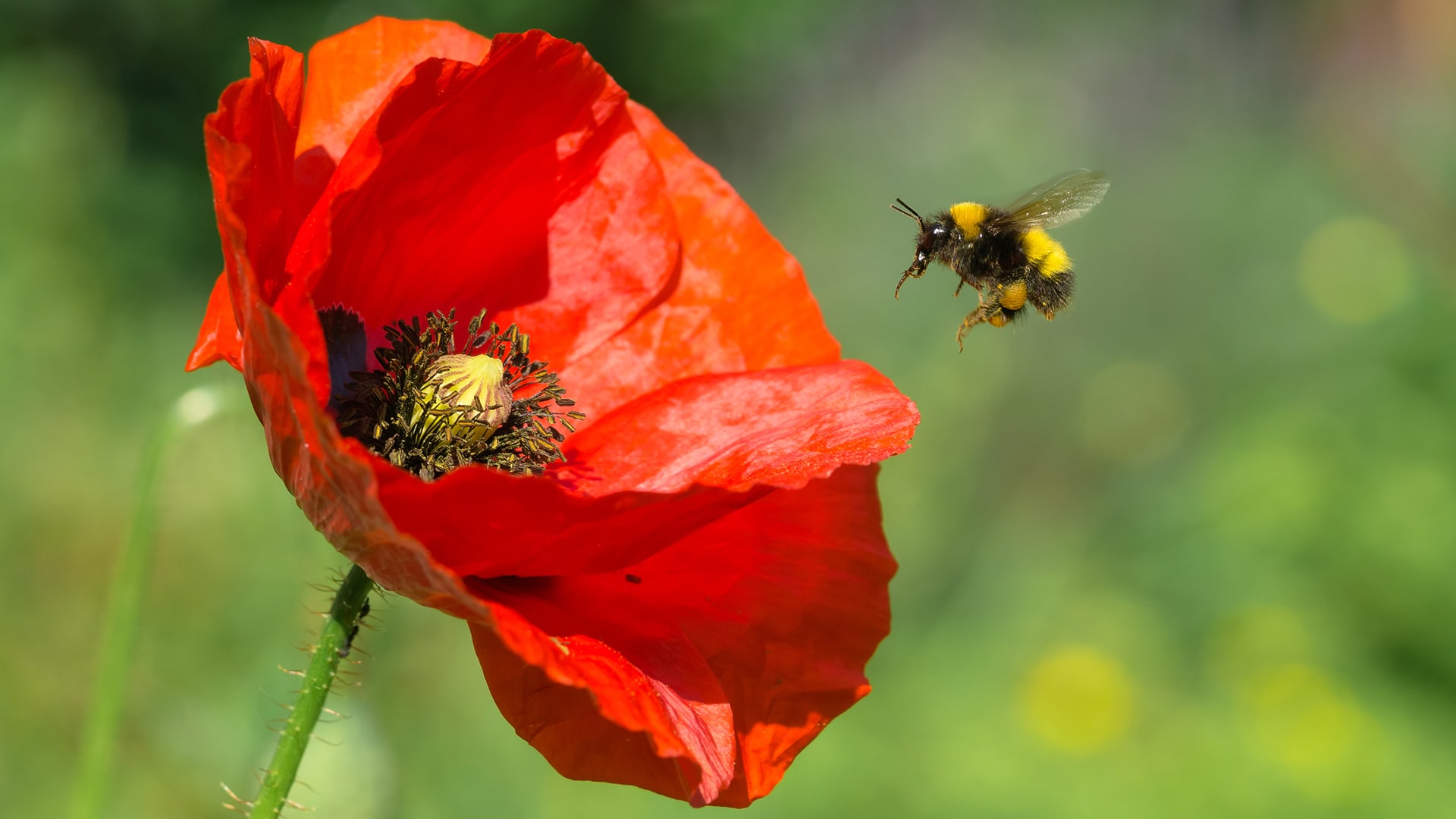
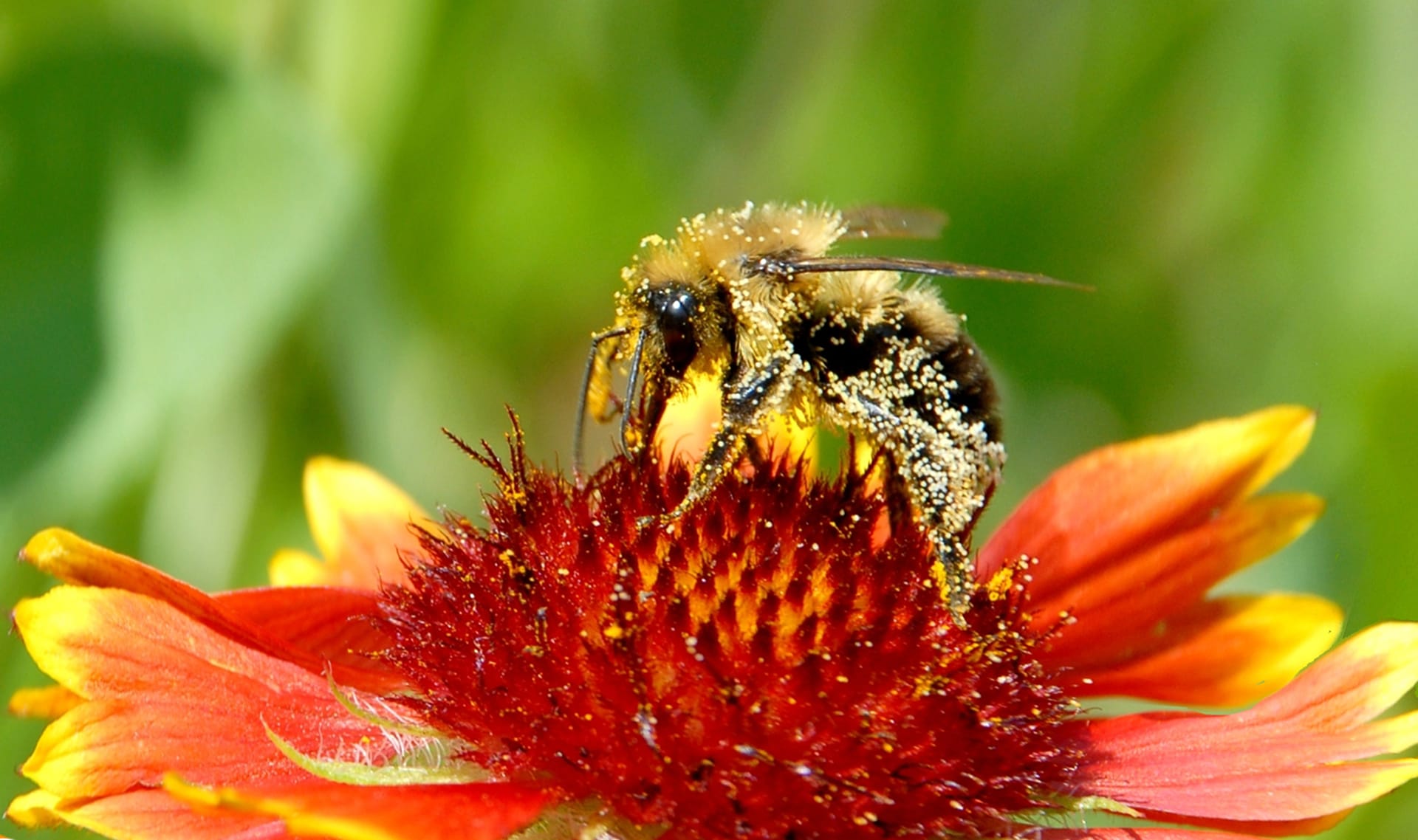
DISCUSS:
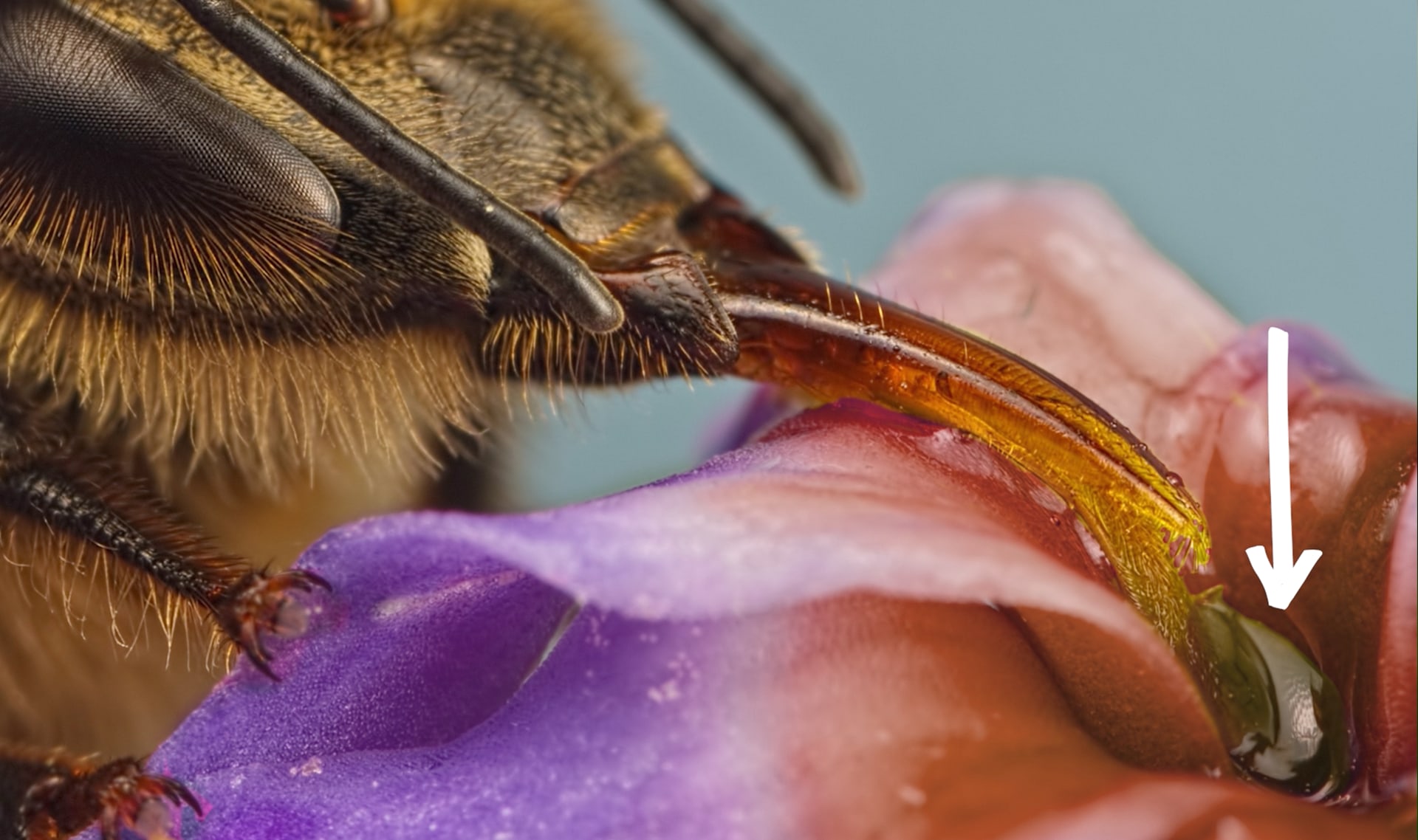
What do you see? What do you think the bee is DOING?
Slide Image
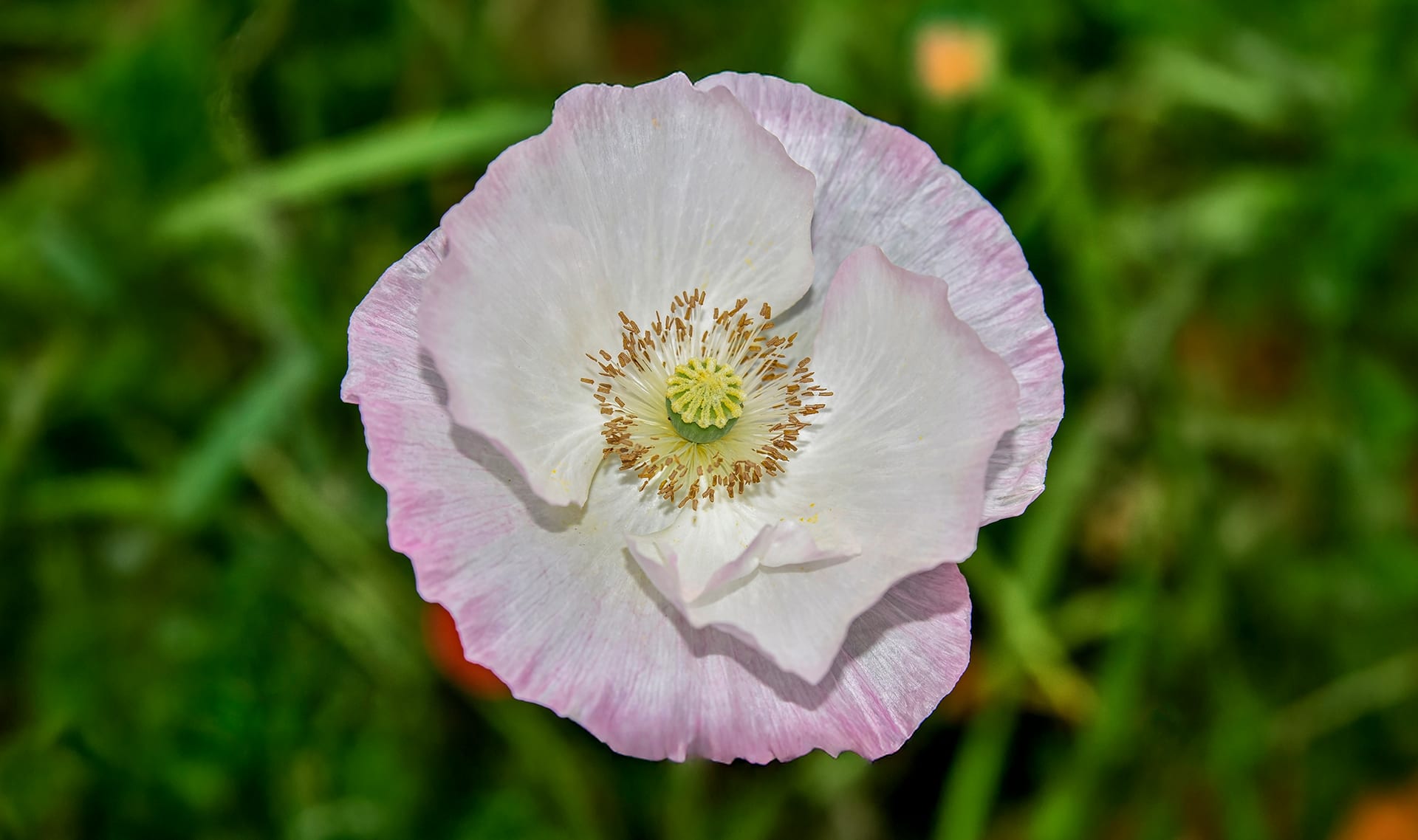
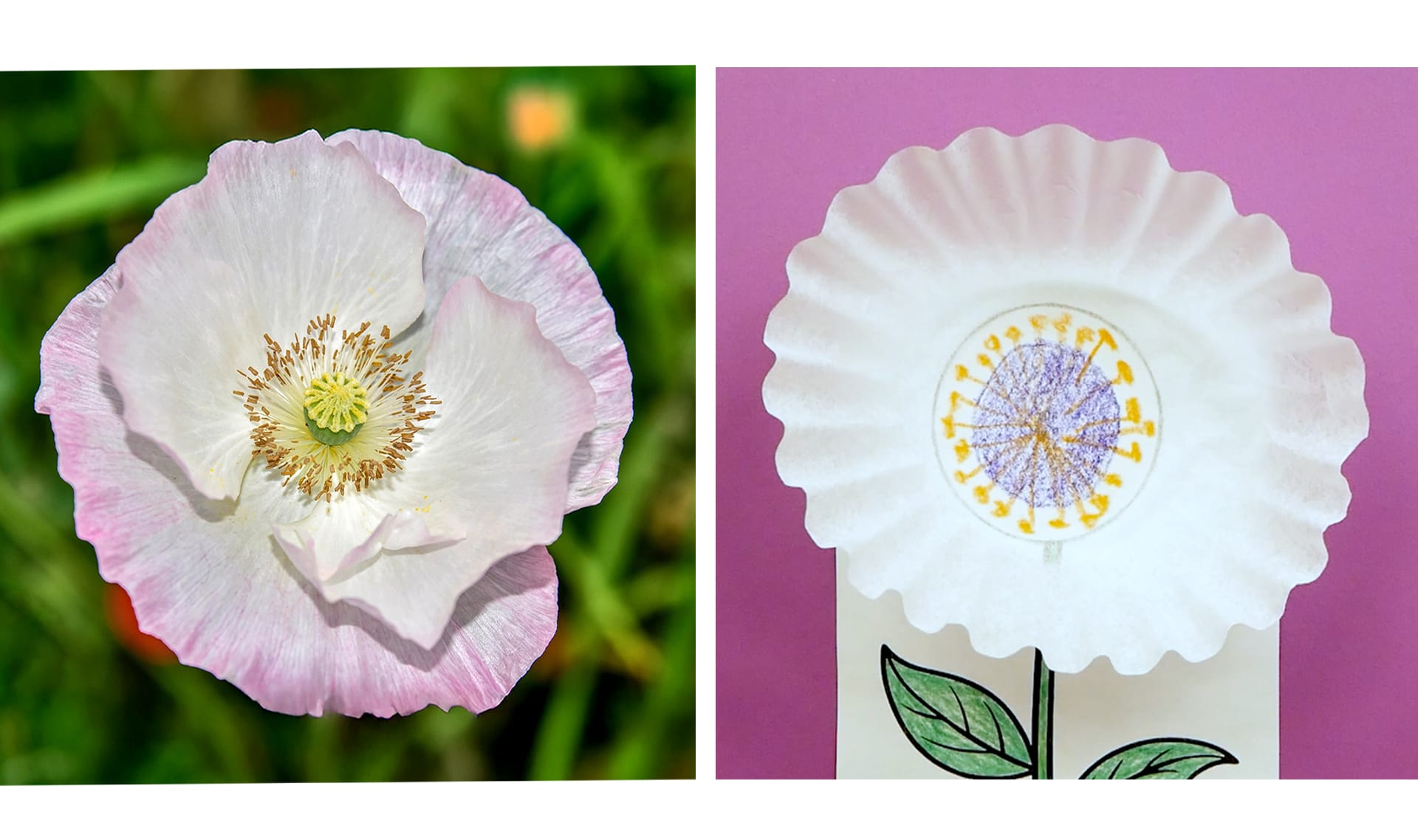
ACTIVITY BREAK:
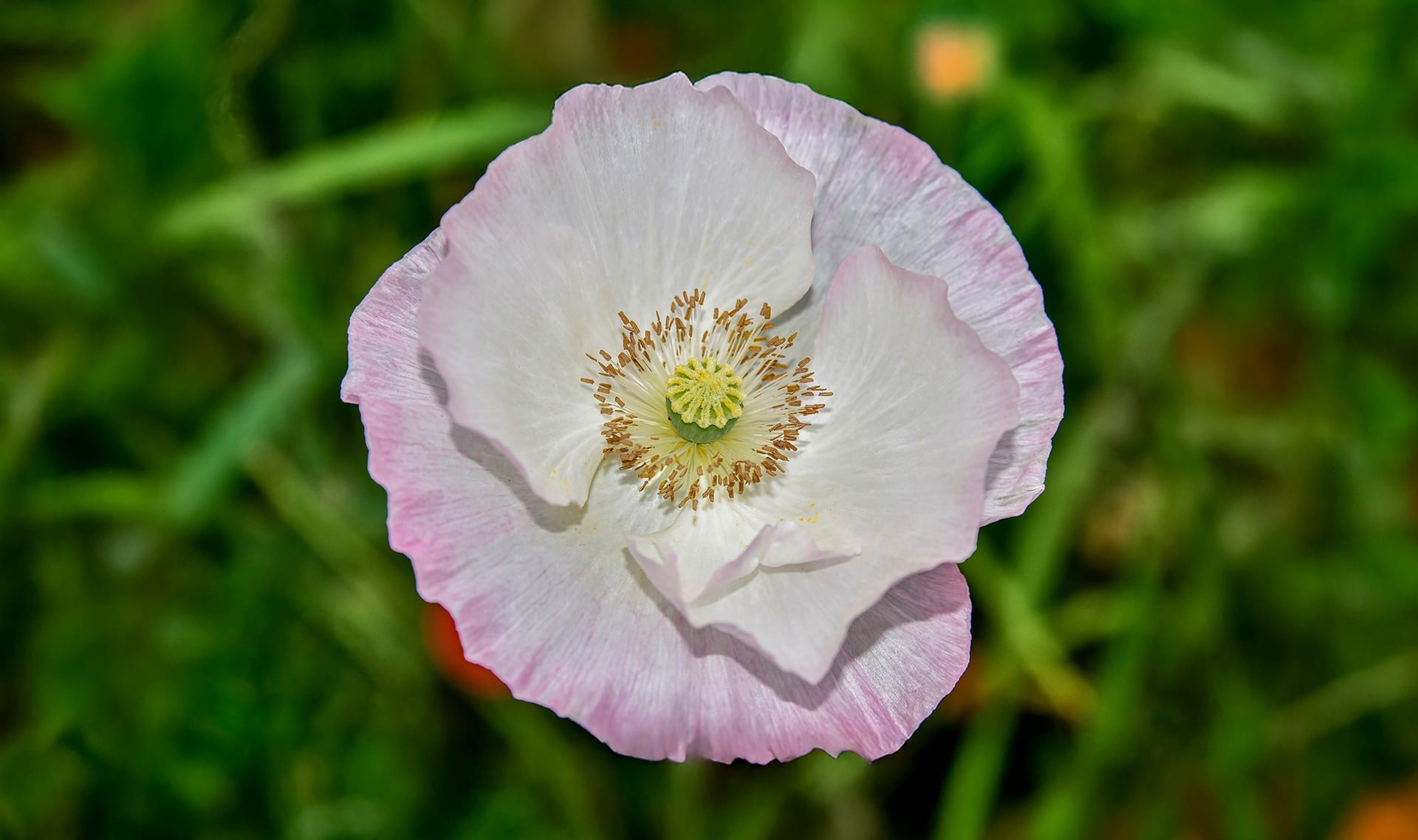
Get a piece of paper. Draw the parts of the flower you see.
You don’t need to label anything. Just draw what you notice.
Step
01/16
In this activity, you’ll work with a partner.
Step
02/16
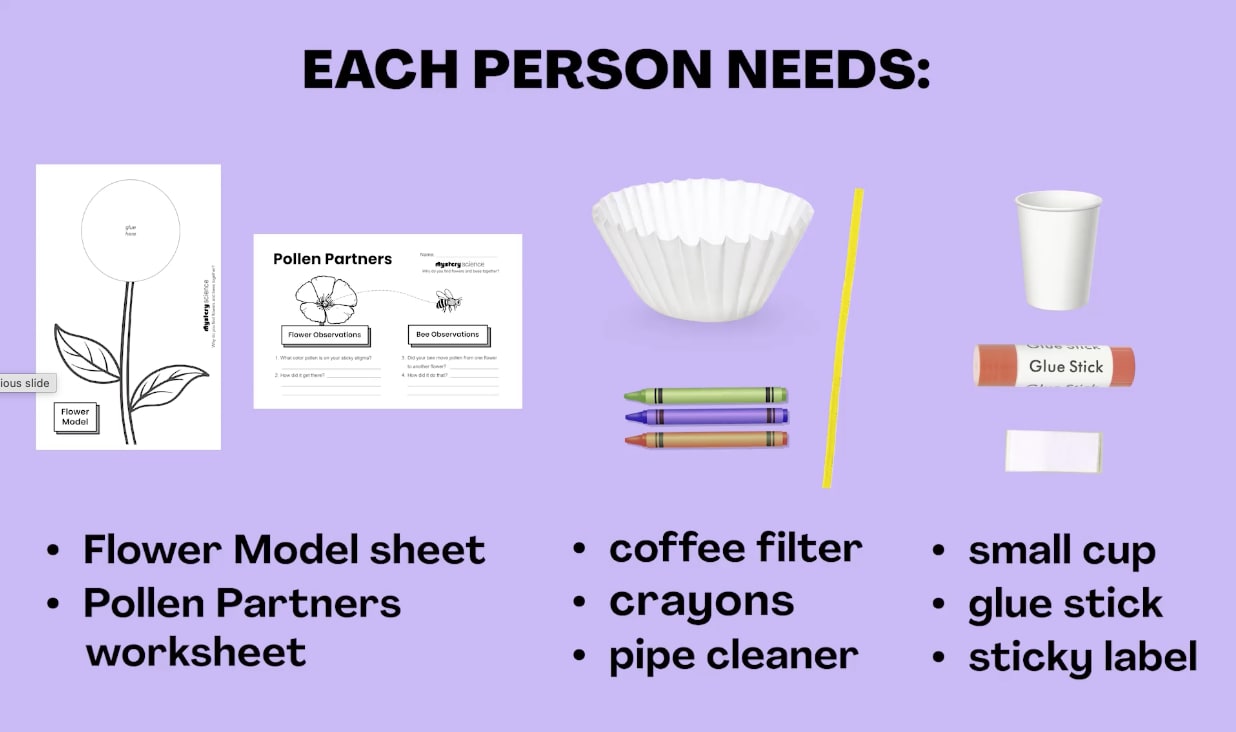
Get these supplies. You’ll get more supplies later.
Step
03/16
Color your plant’s stem and leaves green so that it looks more like a
real plant.
Step
04/16
Use your glue stick to add glue to the circle.
Place your model flower over the circle and press down gently
so that it sticks to the glue.
Step
05/16
Let’s add some more details to your flower model.
Color a big purple circle in the center for nectar. Add orange lines
coming out of the center where the pollen will be.
Step
06/16
Hold out your thumb. Partner: Peel the back off the sticky label.
Wrap it around the thumb with the sticky side out. Put it in the
center of your flower model and press down.
Step
07/16
Switch jobs. Make a sticky loop around your partner’s thumb so
they can add a sticky stigma to their flower. Remember to keep the
sticky side out.
Step
08/16
To make sure your pollen ends up in the right spot, place a cup
upside-down over the center of your flower.
Step
09/16
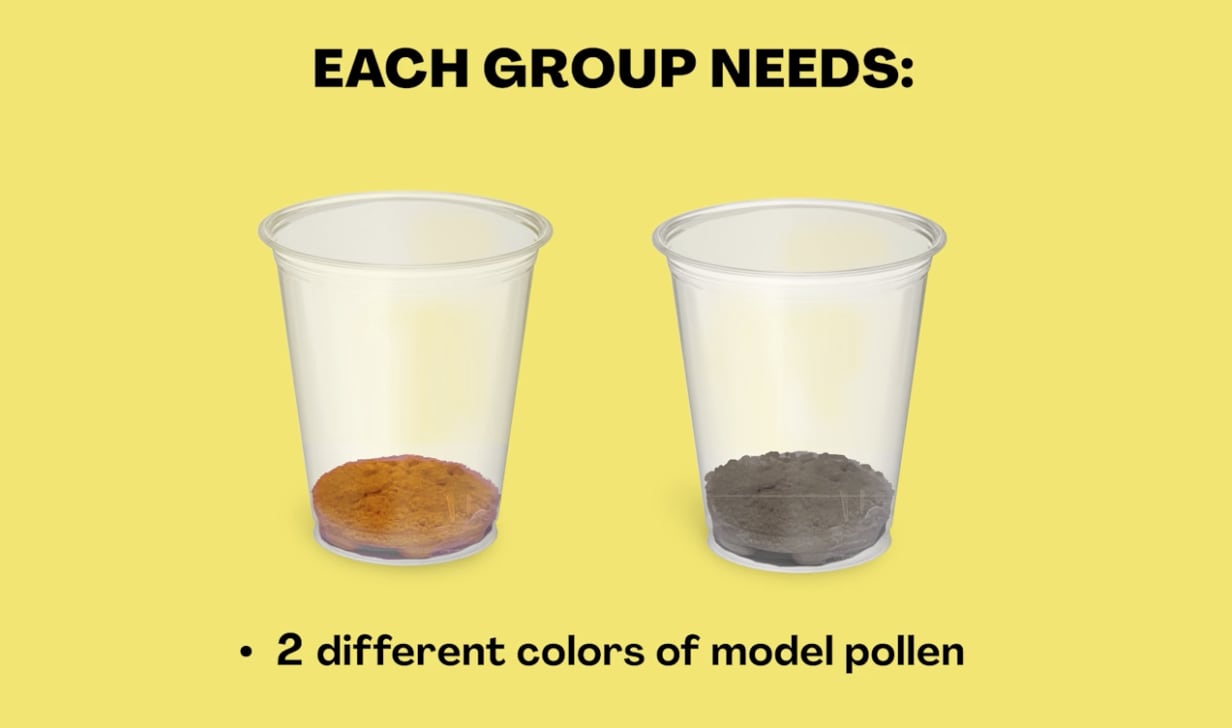
Get your final supplies: pollen!
Each table group needs 2 different colors of pollen and will share.
Step
10/16
Add pollen to your flower model. Use a different color pollen than the
color your partner is using.
Step
11/16
Use your pipe cleaner to make a bee. Fold the top of the pipe cleaner
4 times. Then take the end of the pipe cleaner and wrap it over the
thick part another 4 times.
Step
12/16
Lift the small cup and put it off to the side.
Look carefully at your flower model.
Discuss these questions with your partner.
Step
13/16
In a moment, your bee is going to visit some flowers. But first discuss
these questions as a class.
Step
14/16
Let your bee search for nectar in your partner’s flower first. Then fly
it over to your flower and search for nectar in your flower. Go back
and forth a few times.
Step
15/16
Look closely at the sticky stigma on your flower.
Discuss these questions as a class. Then write your answers
to questions 1 and 2 on your worksheet.
Step
16/16
Now look carefully at your bee.
Discuss and then answer questions 3 and 4 on your worksheet.
Slide Image
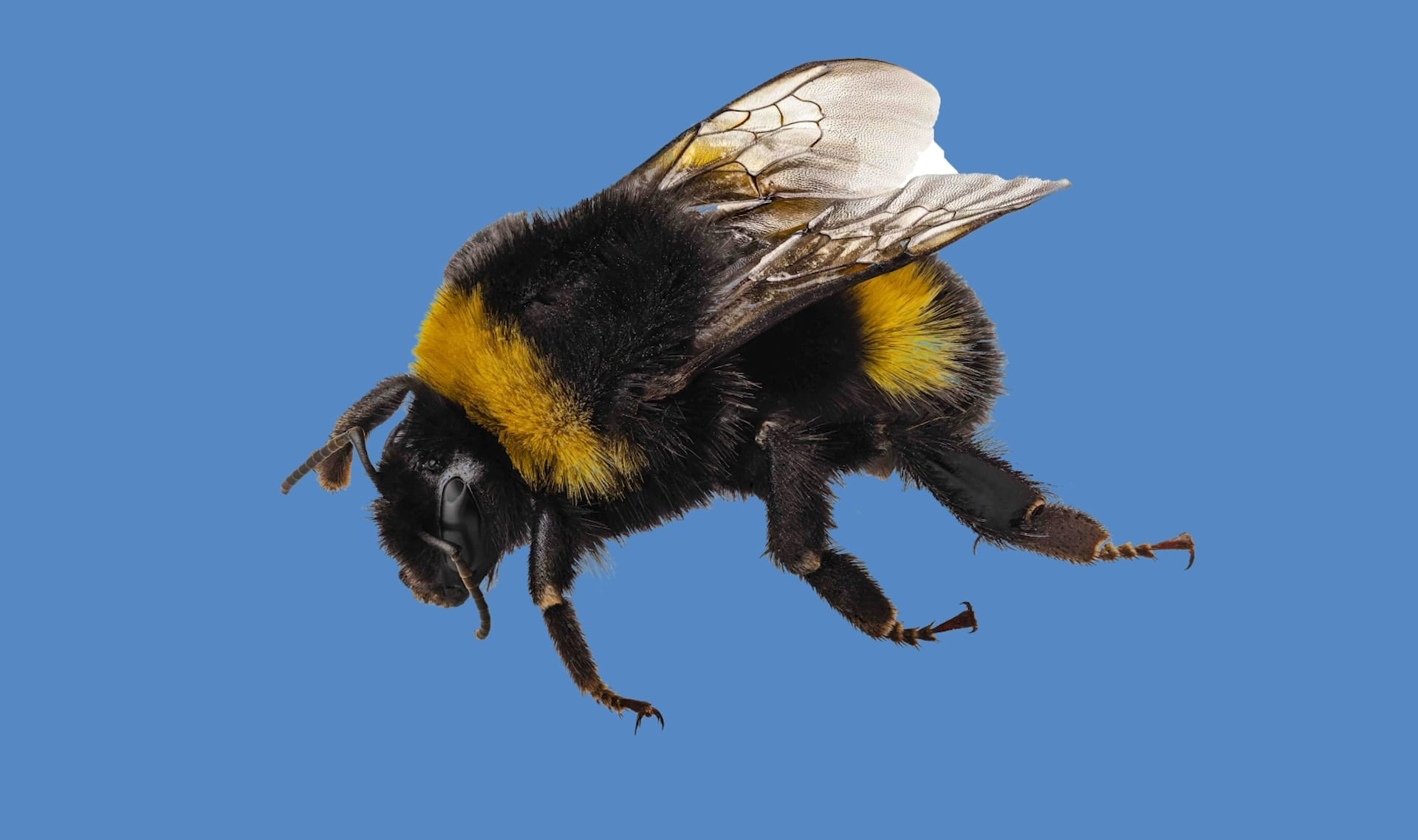
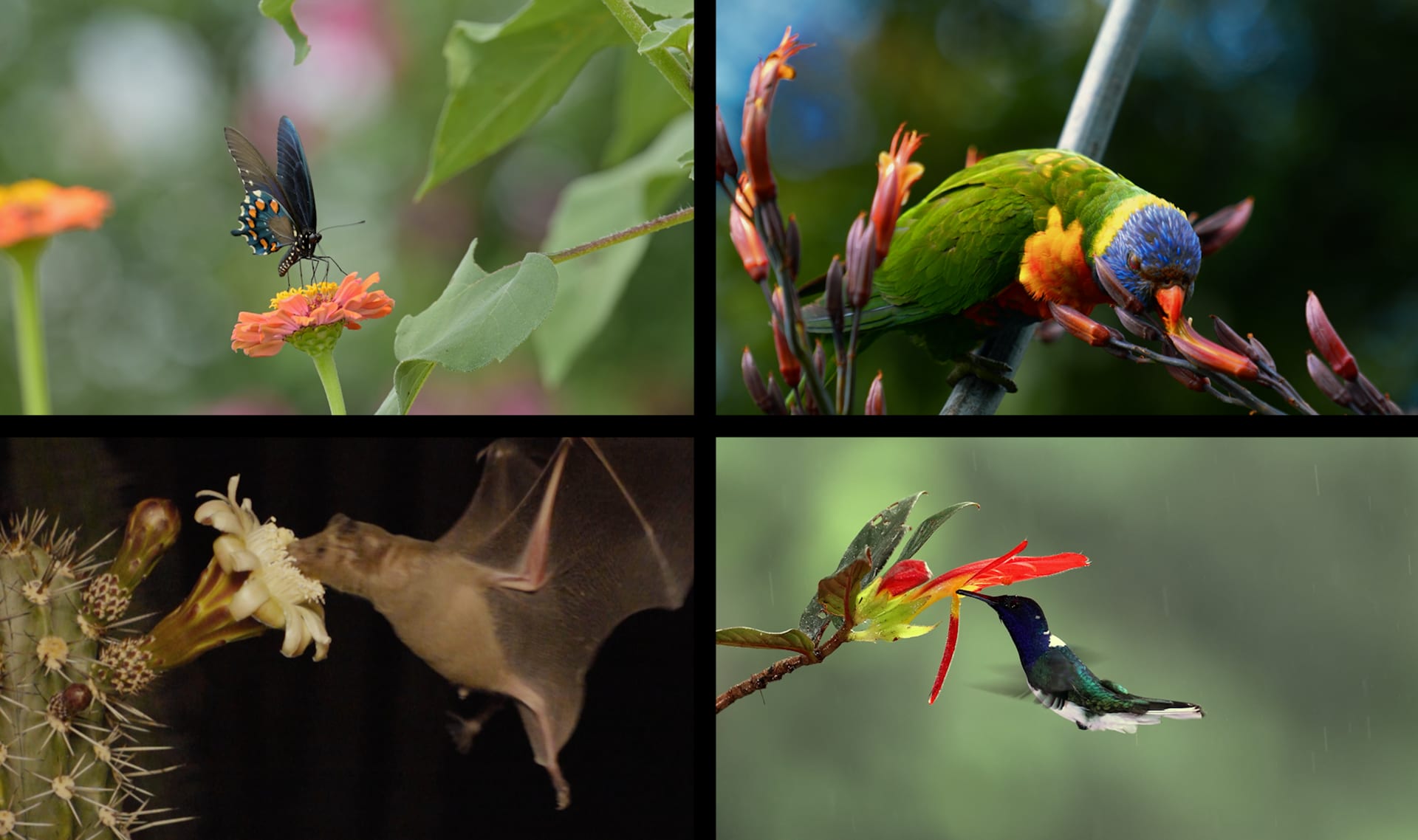
DISCUSS 1 of 2:

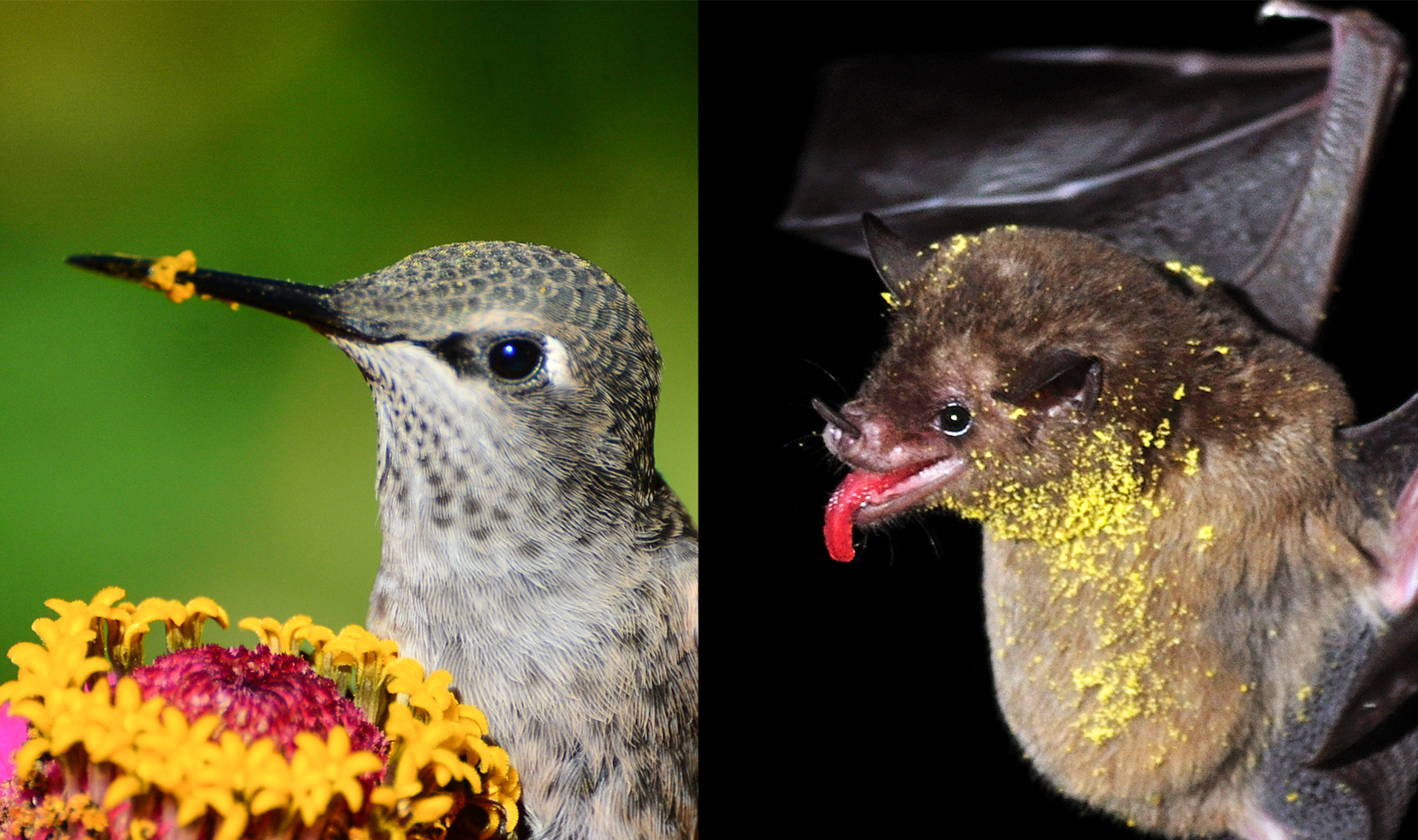
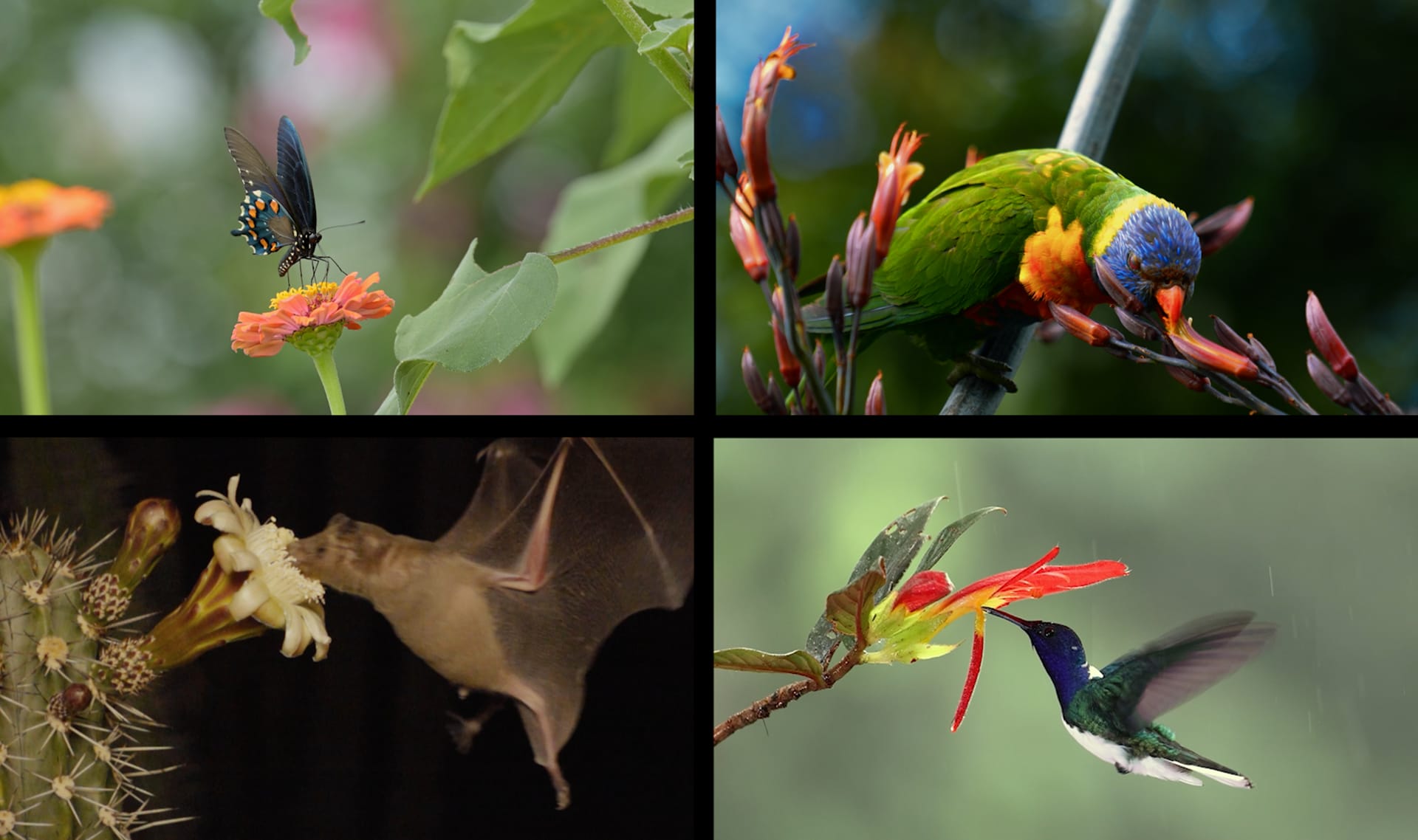
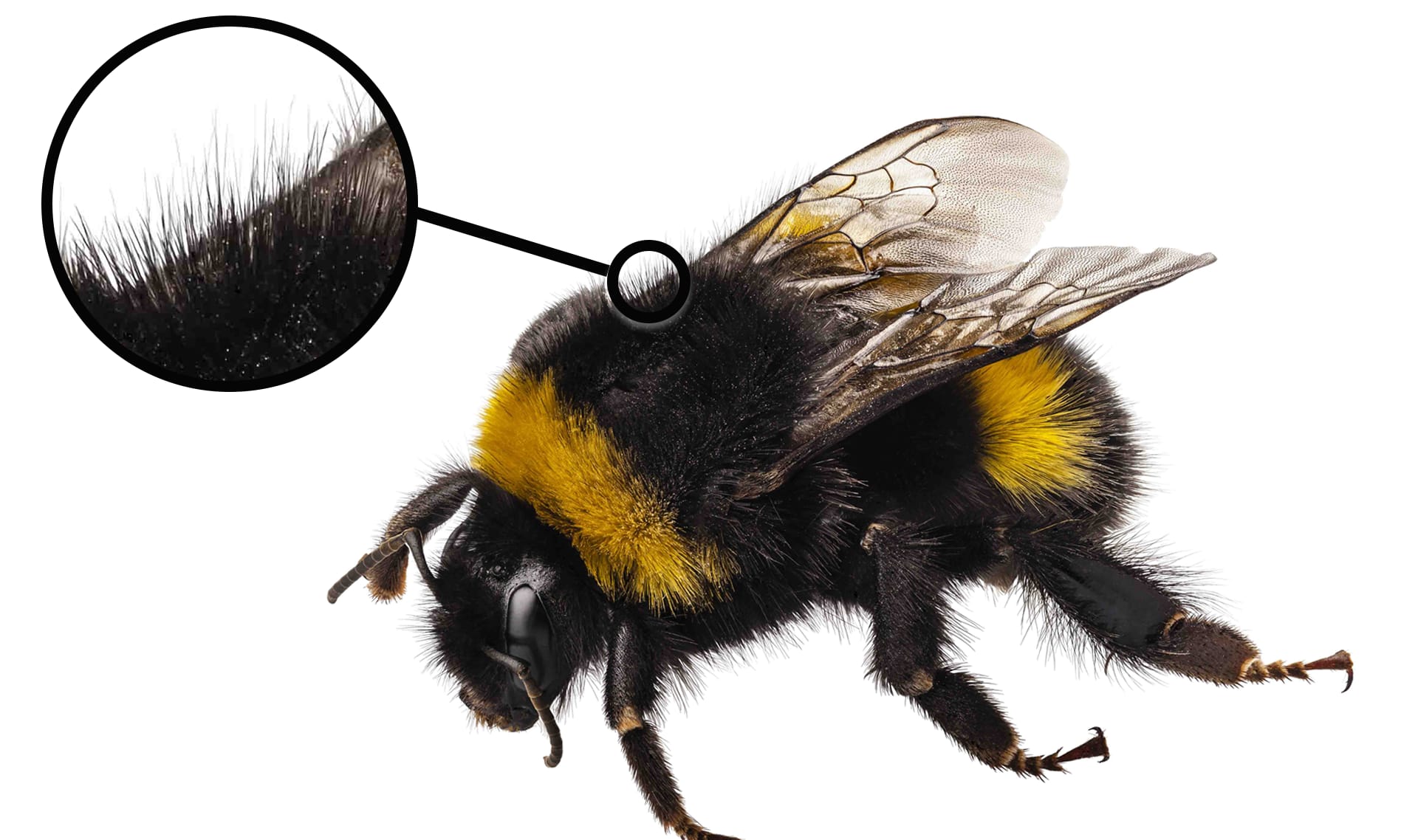
Where could pollen stick to these animals?
Slide Image
DISCUSS 2 of 2:
Slide Image
Slide Image

organism


1 of 14

any living thing
Slide Image

environment


2 of 14

a living thing’s surroundings, including other living things and non-living parts like soil, water, and air
Slide Image

soil


3 of 14

found on Earth's surface; made of tiny rocks and material from dead plants and animals

matter


4 of 14

anything that takes up space and has weight; can be in different forms such as solid, liquid, or gas
Slide Image

model


5 of 14

a pretend version of something that scientists use when the real thing is too big, small, or complicated to work with
Slide Image

evidence


6 of 14

information that can be used to support or reject an idea
Slide Image

microscope


7 of 14

a tool used to see very tiny things up close

decompose


8 of 14

the process of breaking down dead plants, dead animals, or animal waste
Slide Image

decomposer


9 of 14

a living thing that can break down dead plants, dead animals, or animal waste
Slide Image

fungus (fungi)


10 of 14

a living thing that is a decomposer, such as a mold or mushroom
Slide Image

mold


11 of 14

a type of fungus that often decomposes food
Slide Image

mushroom


12 of 14

a type of fungus that usually has a stalk and cap
Slide Image

bacteria


13 of 14

an organism that is usually a decomposer; some cause illness
Slide Image

compost


14 of 14

decomposed material that can be used as fertilizer
🎉 That’s it for this lesson! How did it go?

Extend this lesson

Share this lesson

Sign up now for more great lessons!
Why do you find flowers and bees together?
Plant Adventures Unit
Lesson 3 of 4
Pollination

Activity Prep

Print Prep

Standards

Jump to

Exploration

10 mins

Wrap-Up

15 mins

Extend this lesson

Slow internet or video problems?
 
Plants Lesson 3: Why do you find flowers and bees together?

How did the lesson go?
Terrible OK Good Great Terrific!

How can we improve it?

If you'd like our team to reply to you, please Contact Support instead.

Thanks for your feedback! If you have a question or need help, please contact us. Please consider sharing your review:

Sorry the lesson didn't go well. We read every single review in an effort to improve our Mysteries.

Thanks for letting us know. We’ll wait to ask you for feedback until after you've actually taught it.

Thanks for the feedback! We read every single review in an effort to improve our Mysteries.

Is the video not playing properly?

Please follow these steps:

  1. Very rarely a video will fail to completely load in your browser. Try to reload this page to see if that fixes the problem.
  2. If reloading does not help, try our other video player .
  3. If the video still fails to play, open this video in a new tab and please let us know you’re having trouble. We want to fix this issue for you.

This episode is locked

This lesson is not included in your limited access.

View pricing

This episode is locked

Your membership is expired. The archive of past Mini Lessons is not included in your limited access.

View pricing

Share with colleagues

Thanks for sharing!